

Whether you're heading to ballet, jazz, contemporary, hip hop or full-time dance training, what you eat before class can have a significant impact on your energy levels, concentration, recovery and overall performance.
One of the most common questions I hear from dancers and parents is:
"What should I eat before dance class?"
The answer is rarely as simple as choosing one "perfect" snack.
The best pre-dance nutrition depends on several factors, including:
How long you have before class
The intensity and duration of your training
Your age and stage of growth
Your overall nutrition throughout the day
Your individual digestive comfort
Understanding how these factors work together is what allows sports dietitians to develop nutrition strategies that support performance while protecting long-term health.
Why Does Pre-Class Nutrition Matter?
Dance is an athletic activity that combines strength, endurance, power, coordination and skill. Whether you're attending one recreational class each week or training for several hours each day, your body relies on adequate energy to perform at its best.
Arriving at dance under-fuelled may contribute to:
Reduced energy levels
Difficulty concentrating and learning choreography
Earlier fatigue during class
Reduced training quality
Slower recovery afterwards
For children and adolescents, consistently failing to meet energy needs may also affect healthy growth, development and performance over time.
If your dancer frequently feels exhausted, struggles to recover or is experiencing recurrent injuries, nutrition may be one factor worth considering. You may also find my article "Do I Have RED-S? 7 Early Signs Athletes Often Miss" helpful, which explains the early warning signs of low energy availability and when to seek professional support.
There Isn't One "Perfect" Pre-Dance Snack
One of the biggest misconceptions is that every dancer should eat the same snack before class.
In reality, what you eat should change depending on how much time you have before dancing.
A meal eaten three hours before class should look very different from a snack eaten 20 minutes beforehand.
The goal isn't simply to eat carbohydrates—it's choosing the right type of carbohydrate at the right time, while considering your training schedule, digestive comfort and the demands of the session ahead.
What Should You Eat Before Dance?
The table below provides a general guide.
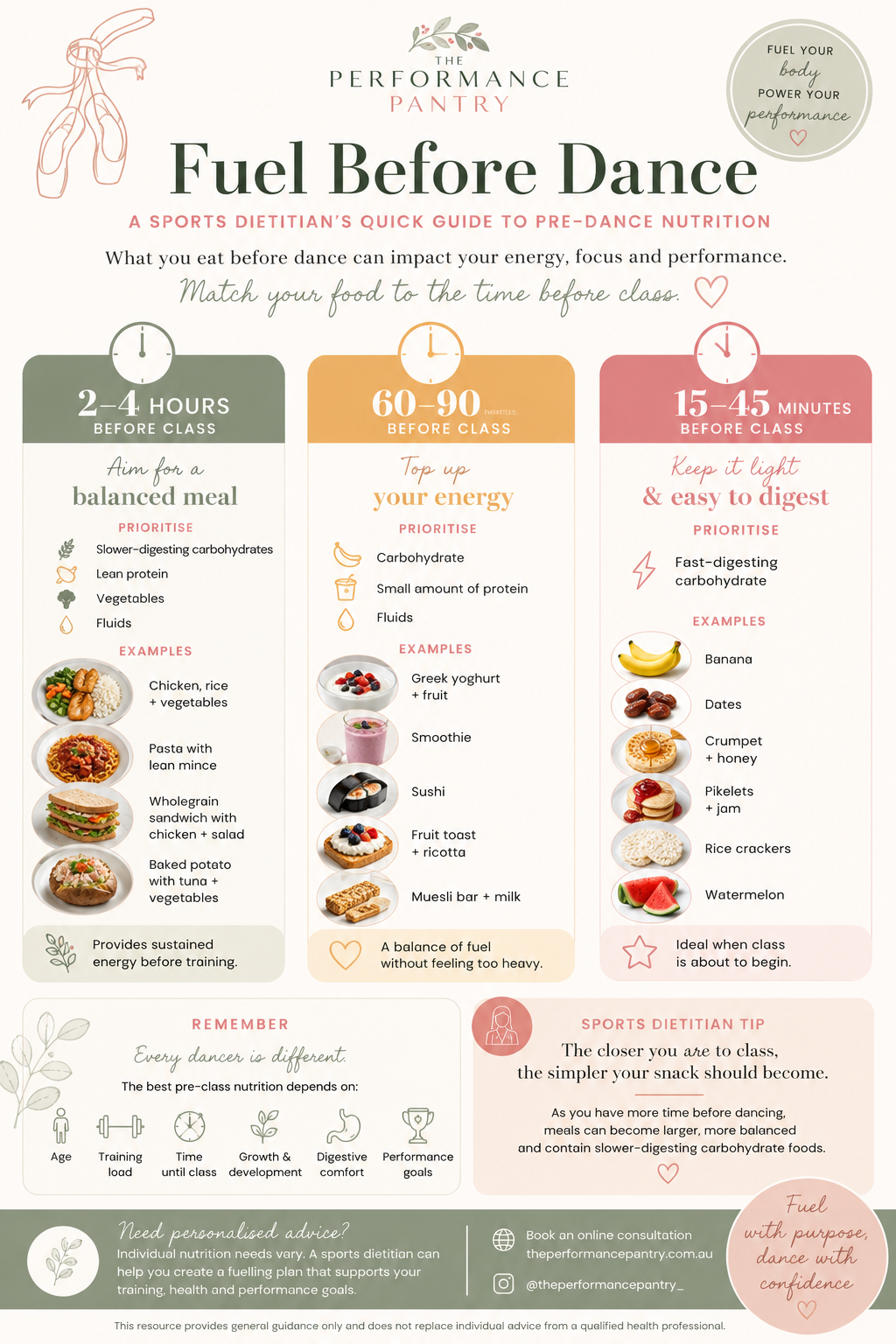
Please note: The examples above provide general guidance only. The ideal pre-dance nutrition strategy varies depending on a dancer's age, stage of growth, training load, digestive comfort, medical history and performance goals. Individual advice from a sports dietitian can help determine the most appropriate nutrition plan for your needs.
Why the Type of Carbohydrate Matters
Not all carbohydrate-rich foods behave the same way.
Some are digested more quickly, while others provide a slower release of energy over several hours.
Neither is "better"—the best choice depends on how long you have before training.
If You Have Several Hours Before Dance
When you have two to four hours before class, meals containing slower-digesting carbohydrate foods can provide sustained energy while giving your body plenty of time to digest.
Examples include:
Wholegrain bread
Brown rice
Wholemeal pasta
Sweet potato
Grainy wraps
These foods pair well with lean protein and vegetables as part of a balanced meal.
If Dance Starts Within the Hour
When class is approaching, many dancers prefer foods that digest more quickly.
These foods are often lower in fibre and fat, making them more comfortable before jumping, turning and high-intensity movement.
Examples include:
Ripe banana
Cut up watermelon
Date based bliss balls
Rice cakes with honey or jam
Dried mango spears
Choosing foods that match the timing of your training may help you feel more comfortable and energised during class.
Pre-Dance Nutrition Looks Different for Every Dancer
A 10-year-old attending one ballet class each week doesn't require the same nutrition strategy as a 17-year-old pre-professional dancer training 25 hours per week.
Likewise, what works before a one-hour technique class may not be appropriate before a full day of rehearsals or a competition.
Factors that influence a dancer's nutrition needs include:
Age and stage of growth
Weekly training volume
Class intensity
Competition schedule
Recovery between sessions
Individual goals
Digestive comfort
This is why generic nutrition advice found online should always be viewed as a starting point rather than a personalised plan.
During adolescence, nutrition supports far more than dance performance—it also plays an essential role in growth, bone development and overall health. If you're supporting a growing dancer, you may also enjoy reading "Fuelling Teen Growth: The Essential Micronutrients Every Active Adolescent Needs."
Common Nutrition Mistakes I See in Dancers
Over the years, there are several patterns I commonly see in clinic.
These include:
Skipping meals because of busy school or work schedules
Arriving at dance already hungry
Avoiding carbohydrates because of nutrition myths
Eating too little before long training sessions
Eating large meals immediately before class
Not adjusting nutrition as training hours increase
Often these habits aren't intentional—they simply develop because dancers are trying to fit food around busy schedules.
Small changes can often make a meaningful difference to energy levels and training quality.
When Should You Seek Professional Advice?
While general nutrition advice is a great starting point, some situations benefit from individualised support.
Consider speaking with a sports dietitian if you or your child:
Frequently feels tired during dance
Is unsure what to eat around training
Has recently increased training hours
Is preparing for competitions or auditions
Has experienced recurrent injuries
Is worried about getting enough energy to support dance
Has concerns about growth, recovery or overall performance
A personalised nutrition assessment considers your training schedule, health history, goals and lifestyle to develop practical strategies that work for you.
Frequently Asked Questions
Is it okay to dance on an empty stomach?
Some dancers training early in the morning may tolerate a small snack before class, while others prefer breakfast afterwards. However, regularly dancing without enough fuel may affect energy, concentration and training quality. The most appropriate approach depends on your training schedule and individual needs.
Is a banana enough before dance?
A banana (especially a ripe one!) can be an excellent pre-dance snack when eaten shortly before class because it provides easily digested carbohydrate. Whether it is enough depends on the length and intensity of training, your previous meals and your overall energy requirements.
Should dancers avoid carbohydrates before class?
No. Carbohydrates are the body's preferred fuel source during moderate and high-intensity exercise. Rather than avoiding carbohydrates, the focus should be on choosing the type and timing that best suits your training session.
What if I get a sore stomach before dancing?
Digestive discomfort can have many causes. Adjusting meal timing, portion size and food choices may help, but ongoing symptoms should be assessed individually to ensure your nutrition supports both comfort and performance.
What is the best snack before a ballet class?
There isn't one perfect snack for every dancer. The best option depends on how long you have before class, the intensity of the session and your individual nutrition needs. A snack that works well before a one-hour ballet class may not be appropriate before a full day of rehearsals.
Final Thoughts
Pre-class nutrition isn't about finding one "perfect" snack or following rigid food rules.
It's about understanding how meal timing, carbohydrate choice and your training schedule work together to support energy, performance and recovery.
Every dancer is different, and the right strategy should reflect your age, training load, goals and lifestyle.
Ready to Fuel Your Dance Performance with Confidence?
At The Performance Pantry, I provide personalised online sports nutrition consultations for dancers of all ages—from recreational students through to pre-professional and elite performers.
Whether you're preparing for auditions, increasing your training load, returning from injury or simply want confidence that your nutrition is supporting your dancing, together we can develop a practical, evidence-based plan tailored specifically to your needs.
If you're ready to take the guesswork out of dance nutrition, I'd love to help.