

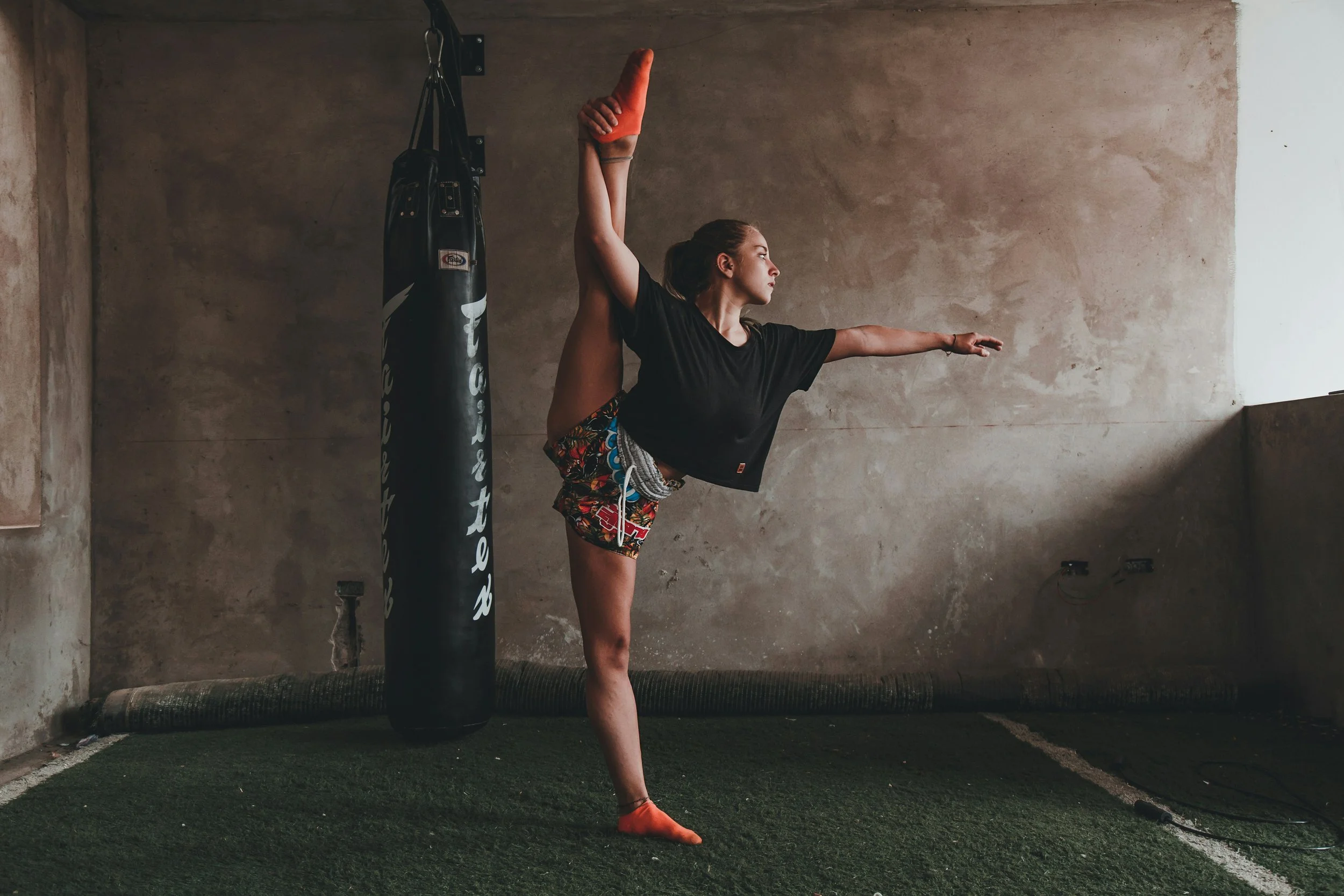
Have you noticed your period becoming irregular or disappearing altogether since increasing your training?
Perhaps you're training harder, trying to improve your performance or struggling to balance exercise with a busy schedule. You might be eating what you consider a healthy diet, maintaining your usual weight and feeling like you're doing everything right — yet your period has stopped.
A missing period isn't something to ignore or simply accept as part of being an athlete.
Changes to your menstrual cycle can be an important sign that your body isn't receiving the energy it needs to support both exercise and essential physiological functions.
One possible explanation is low energy availability, which can contribute to Relative Energy Deficiency in Sport (RED-S).
The challenge is that under-fuelling isn't always obvious. You don't need to be underweight, intentionally restricting food or experiencing a dramatic decline in performance for your health to be affected.
In this article, we'll explore why exercise can affect your menstrual cycle, how to recognise potential warning signs and why getting the right support matters.
If you're concerned about your period, understanding what's happening is the first step towards protecting your health and supporting your performance.
Why do female athletes lose their periods?
Your menstrual cycle is regulated by a complex interaction between your brain, reproductive hormones and ovaries. These systems are also influenced by energy intake, exercise demands, stress and overall health.
When your body consistently doesn't receive enough energy to meet its needs, it can adapt by reducing energy expenditure on certain physiological functions, including reproduction.
This can disrupt the hormonal signalling involved in ovulation and menstruation.
In some athletes, this results in functional hypothalamic amenorrhea (FHA) — a condition in which hormonal signalling from the brain to the reproductive system is suppressed. It can be associated with inadequate energy intake, high exercise demands, psychological stress or a combination of these factors.
You might notice:
Your menstrual cycles becoming longer or unpredictable.
Your periods becoming lighter or less frequent.
Missing one or more periods.
Your periods stopping altogether.
These changes can occur in endurance athletes, dancers, gymnasts, swimmers, team-sport athletes and recreational exercisers.
It's also important to understand that menstrual disruption isn't always caused by under-fuelling. Pregnancy, thyroid conditions, PCOS and other medical issues can affect your cycle, which is why appropriate assessment is essential.
Signs your body might not be getting enough energy
Menstrual changes can be one of the more noticeable signs of inadequate fuelling, but they aren't the only ones.
Other possible warning signs include:
Persistent fatigue or difficulty getting through training sessions.
Declining performance despite consistent training.
Poor recovery between sessions.
Recurrent injuries or bone stress injuries.
Frequent illness.
Feeling unusually cold.
Changes in mood, concentration or sleep.
Reduced libido.
Some athletes experience several of these symptoms, while others notice very few.
It can also be difficult to distinguish under-fuelling from the normal demands of a busy training programme. This is one reason an individual assessment can be valuable: the pattern of symptoms, training history, menstrual history and nutrition intake all help provide context.
Is losing your period from exercise dangerous?
A missing period is worth taking seriously because prolonged menstrual dysfunction associated with energy deficiency can affect more than reproductive health.
Oestrogen plays an important role in maintaining bone health. When reproductive hormones are suppressed, bone formation and bone mineral density can be affected, increasing the risk of bone stress injuries.
This is particularly important for athletes who participate in sports involving repetitive loading, high training volumes or substantial changes in training intensity.
Adolescent athletes need particular attention because they are still developing bone mass and have additional energy requirements for growth.
Under-fuelling can also affect recovery, immune function, mood and the body's ability to adapt to training.
The message isn't that every missed period signals a serious condition. It's that persistent menstrual changes deserve investigation rather than being dismissed as an inevitable consequence of athletic training.
How do you get your period back?
If inadequate energy availability is contributing to your missing period, addressing the underlying energy imbalance is central to recovery. However, knowing that you may need to eat more is often easier than working out exactly what needs to change.
You might already eat three meals a day but struggle to meet the demands of your training. Perhaps you're missing snacks between sessions, eating too little before exercise, restricting carbohydrates or finding it difficult to recover after demanding workouts.
Alternatively, your training schedule, current nutritional intake or other health factors may need closer assessment. There is no single meal plan, supplement or calorie target that works for every athlete. Nutrition, training and recovery all matter
Depending on your circumstances, recovery may involve increasing energy intake, improving how you fuel around exercise, adjusting training demands or addressing other barriers to adequate nutrition.
It may also involve weight restoration, where appropriate.
Research supports reversing energy deficiency through improved nutrition and, when needed, reduced exercise energy expenditure. It also highlights the importance of a multidisciplinary approach involving medical care and sports dietetic support.
The appropriate approach depends on factors such as your menstrual history, training load, current intake, symptoms, injury history and overall health.
Simply eating more isn't always as straightforward as it sounds. Understanding where your current fuelling may be falling short is an important part of developing an approach that is realistic, effective and appropriate for your sport.
How long does it take for your period to return?
Menstrual recovery varies between individuals and can take months or longer.
The time required depends on the underlying cause, how long your cycle has been disrupted and the changes needed to support recovery.
Importantly, the return of one period doesn't necessarily mean that ovulation and reproductive hormone function have fully recovered.
If your period has stopped, the goal shouldn't simply be to get it back as quickly as possible. It's to understand the underlying problem and support your longer-term health.
What if I'm eating well but still don't have a period?
This is a common source of frustration for athletes. You might eat regular meals, choose nutritious foods and feel that your diet is balanced. Yet you could still be falling short of your individual energy, macro and micro nutrient requirements.
On the other hand, a missing period may have little or nothing to do with your fuelling. A GP can investigate potential medical causes, while a sports dietitian can assess your nutrition and how well it supports your training and recovery.
The two approaches can work together to help you understand what's happening and determine the next steps.
When should you see a doctor about a missing period?
It's worth seeking medical advice if your periods have become persistently irregular or have stopped, particularly if you are training heavily, experiencing fatigue or have a history of bone stress injuries.
General clinical guidance recommends investigation when menstrual cycles repeatedly exceed 45 days or when periods have been absent for three months or more. Seek advice sooner if you are concerned or have other symptoms.
Your doctor may recommend pregnancy testing, blood tests to assess thyroid function and reproductive hormones, or further investigations depending on your circumstances.
Bone density assessment may also be appropriate in some cases, particularly when amenorrhea has persisted or there is a history of stress fractures or other risk factors.
If you're an adolescent athlete, delayed puberty or not having had your first period by age 15 also warrants medical assessment.
You don't need to wait until your performance declines or an injury occurs before seeking help.
How can a sports dietitian help?
If your period has stopped or become irregular, it can be difficult to know whether you're eating enough, which aspects of your nutrition need attention or whether your training demands are contributing.
A sports dietitian experienced in female athlete health and RED-S can help you assess these factors and develop an individualised nutrition strategy.
At The Performance Pantry, a Female Athlete Health Consultation can help you explore:
Whether your current nutrition is meeting your training and daily energy demands.
Potential gaps in your meal timing, energy intake and recovery nutrition.
How your fuelling approach fits your sport, training schedule and lifestyle.
Nutrition strategies to support recovery and bone health.
Potential barriers that make eating enough difficult.
Whether additional medical or multidisciplinary support may be appropriate.
The aim isn't simply to increase your food intake or prescribe a generic meal plan. It's to understand your individual circumstances and develop a practical approach that supports your health, menstrual function and performance.
You don't have to work through these questions alone or rely on trial and error.
Frequently asked questions
Can exercise alone stop your period?
Exercise itself doesn't necessarily stop menstruation. However, high training demands combined with insufficient energy intake can disrupt the hormonal signals that regulate your cycle. Other medical causes should also be considered.
Can you have RED-S if you're not underweight?
Yes. RED-S can affect athletes at any body size. Weight loss may be one sign of energy deficiency, but maintaining your weight doesn't rule it out.
Can you still get pregnant if you don't have a period?
Yes. Ovulation can occur before your next period, even after a prolonged absence of menstruation. A missing period is not reliable contraception. If pregnancy is possible, take a pregnancy test and seek medical advice.
Do supplements help bring your period back?
No supplement reliably restores menstruation when the underlying issue is energy deficiency. Supplements may be appropriate for specific nutritional deficiencies, but they shouldn't replace adequate fuelling and medical assessment.
Should I stop exercising if my period has stopped?
Not everyone needs to stop exercising completely. However, training modifications may be necessary depending on the severity of energy deficiency, your symptoms and any injuries. Your healthcare team can help determine an appropriate approach.
Ready to take the next step?
Your menstrual cycle can provide valuable information about your health and how well your body is coping with the demands of training.
If your period has become irregular or stopped, it's worth finding out why rather than assuming it's simply part of being an athlete.
At The Performance Pantry, I support athletes and active women to address under-fuelling, navigate RED-S and develop nutrition strategies that support both health and performance.
Book a Female Athlete Health Consultation to explore your individual needs, identify potential gaps in your fuelling and develop a plan tailored to your training and recovery goals.
You deserve to feel confident that you're fuelling your body for both the sport you love and your long-term health.
This article provides general educational information and is not a substitute for individual medical advice, diagnosis or treatment. Menstrual disruption should be assessed by an appropriately qualified healthcare professional.